Field sales teams are challenged by evolving post-COVID customer expectations. Customer loyalty is driven increasingly by more personalized awareness of their needs, buying patterns and service issues from their account managers. Field reps increasingly do not want to walk in blind in an awkward sales conversation without knowing current sales fulfillment delays or open service issues. To plan their territory visits proactively, field teams want to know installed assets approaching end-of-life or upcoming service contract renewals.
The information is available but often scattered across CRM, ERP, Field Service Management (FSM) apps and other back-office systems that are not readily mobile accessible – though agentic AI might be ready to offer a very simple solution, using voice-prompts to access information and take actions on the road.
Field Sales: A people or a systems problem?
Ask a field sales leader what’s holding their team’s performance back, and one might expect the usual suspects: people not prospecting enough, not logging their notes on the road, people not spending enough time with their customers. But a 2026 State of Field Sales report surveying field sales leaders by Spotio identified the top 2 obstacles faced as:
- Limitations of existing processes and technology
- Lack of visibility into data
In other words: the tools are the problem, not the people driving between accounts all day.
Field reps spend only 43% of their time actually selling, and lose close to 20% of their weekly time to admin and data entry – time spent re-typing what already happened, instead of prospecting, planning and prioritizing territory visits or being with the next customer.
Some sources even claim that manual CRM data entry, logging visit notes, and processing expense reports, consumes up to 65% of a field rep’s week.
Friction in On-the-Spot Actionability
Closing deals in the field often stalls while waiting for HQ or Sales Ops to approve custom pricing and discount tiers. Field reps face the frustration of deals getting stuck or delayed due to credit limit reviews and approvals by Finance or incorrect inventory availability and lead times information, resulting in loss of trust and credibility with the customer.
Missing Visibility into Installed Assets
In industries like equipment sales, the margins from consumables, post-warranty replacement parts sales and service contracts are often more significant than the initial sale of the equipment / product.
However, field sales and service teams are often lacking visibility into installed assets and upcoming renewals of service / maintenance contracts for effective territory management and data-driven customer focus and prioritization. This can result in competitors poaching service and parts revenue, impacting wallet share.
Back-Office System Fragmentation and Lack of Integration
Over 50% of legacy ERP implementations have been in place for more than 10 years, creating severe integration bottlenecks. Accessing and moving data across these platforms traditionally requires costly, custom API pipelines that break constantly.
Middleware solutions offer a more robust solution but integration projects can be complex and expensive due to the overhead of conventional ETL (extract-transform-load) operations and disparities between datasets across systems making it difficult to establish a foundational “ground zero”.
Agentic Connectivity: An opportunity to instantly leapfrog system upgrades?
Agentic AI offers the opportunity to circumvent long system upgrade cycles and bypass IT backlog, with the ability to connect on-demand to different data sources (versus conventional integration), fetching the data as a mobile-friendly Customer 360 snapshot and propagating on-the-road actions to back-office systems – without field reps entering data manually, by enabling them to simply talk to the systems and trigger business processes with simple voice prompts to an AI Agent on their phone!
A day in the Field with an AI “co-worker”
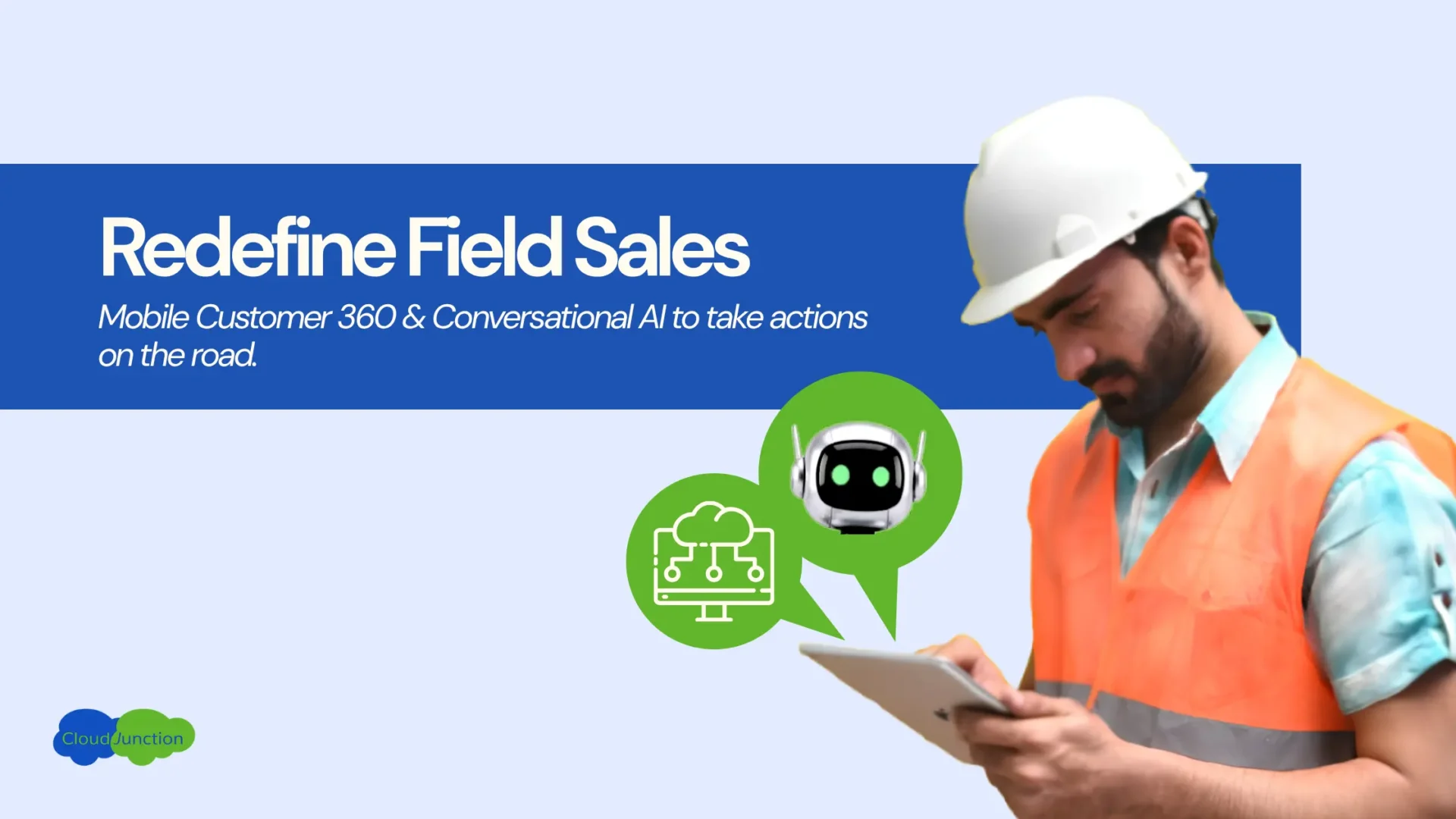
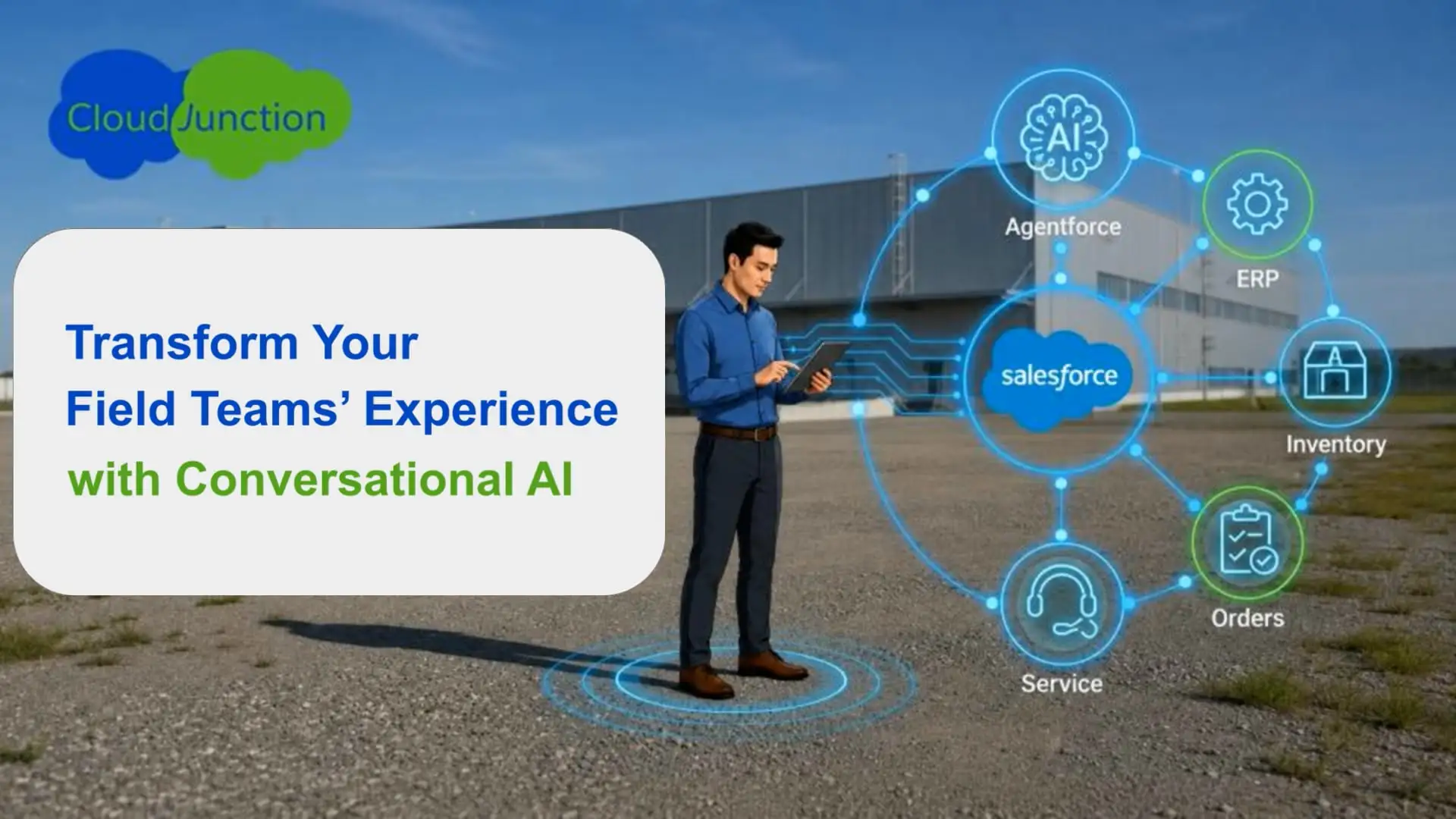
Envision a field rep armed with an AI Agent “co-worker” on their mobile phone. The AI Agent is connected to their CRM, their FSM platform and their ERP or Inventory system.
- The rep communicates with the AI Agent using simple agentic voice prompts, without typing or logging data manually.
- The AI Agent can fetch data in real-time from one or multiple systems, aggregating it into bite-sized snapshots (or visualizing it on a territory map!) that the field rep can review in a parking lot, before walking into a customer meeting.
- The AI Agent can also propagate actions to different systems, creating quotes, orders or service tickets / work orders as needed, from the rep’s voice prompts.
1. Awareness – Walking In With a Real-Time Customer 360
No spreadsheet reports to plough through. No clicking through 10 CRM and ERP screens. Ahead of their on-site, the field rep asks a simple question using their phone: “Give me a snapshot of this customer.”
The AI agent pulls together everything scattered across systems – open Salesforce opportunities, ERP orders, outstanding invoices and service work orders – into one plain-English summary.
Why it matters: The fastest way to lose credibility with a customer is to show up blind to their recent account history. Compressing 15 minutes of digging into a single AI voice prompt ensures the rep walks in prepared and aware!
2. The Field Rep in shining armor? Instantly solve problems on-site
The customer points out a machine part in need of replacement and wants to know the lead time so they can know when it would be functional again.
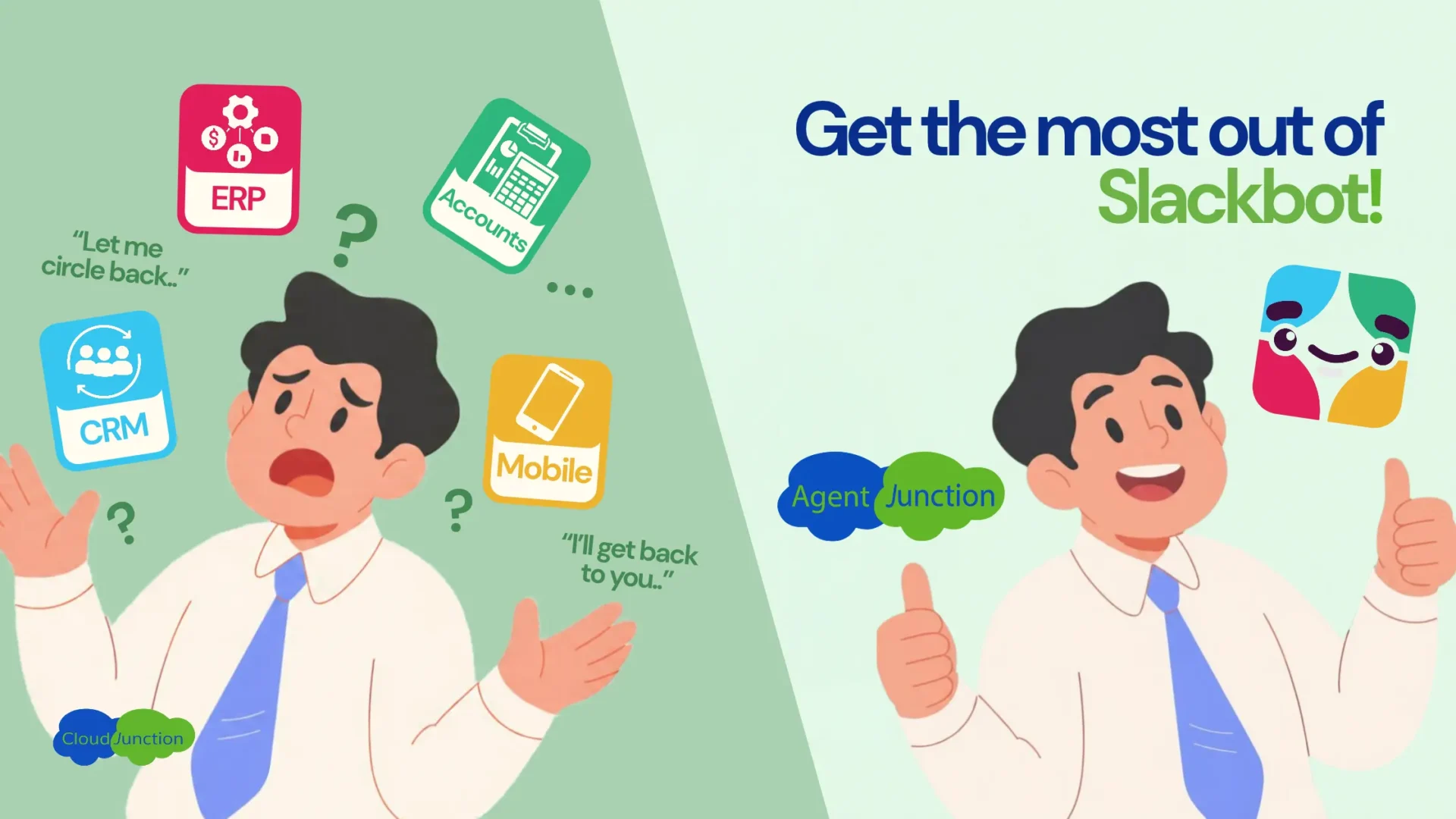
- The old playbook: “Let me call the office, have our Sales Ops team check with our warehouse, and get back to you.”
- The new playbook: The rep asks the AI agent and gets an on-the-spot answer on stock availability and lead time.
Why it matters: Every promise to “circle back” is a door left open for a competitor to walk through first. Answering on the spot, right in front of the customer, secures their trust and keeps the deal alive.
3. Go from Conversation to Closed Deal, at the point-of-action
- Check inventory and lead time.
- Request a quote.
- Take an order.
- Enter the order into the ERP.
- Share the order confirmation number with the customer. Project the expected shipment date.
- Walk out with meeting notes auto-logged. The forecast is automatically updated in the CRM.
- The service work order is created in the FSM and routed to the technician.
All of this done without typing or manual data entry. Just simple voice prompts to the AI coworker take care of it all!
The Agentic Connectivity Recipe
Agentforce sits natively inside the Salesforce mobile app, simplifying the user experience to interact with only one app – a single chat interface using conversational AI prompts, without requiring any training.
A solution like AgentJunction augments the Agentforce to deliver the field rep experience envisioned in this post. It connects to the ERP, FSM and other systems with a zero-copy architecture, bypassing conventional ETL overhead and avoiding the complexity and cost of establishing API-based data sync pipelines.
See it in Action — Watch Demo!
One conversation. An empowered rep, a closed deal, and a CRM that updates itself before driving out of the customer’s facility. That’s what happens when the technology finally catches up to the job field reps already do well.
The reps were never the bottleneck. The tools were. Put an AI coworker in the field, and watch “limitations of existing technology” drop off next year’s list of top challenges.
Try it in your Sandbox
Contact CloudJunction to get a free trial deployment in your Sandbox, with courtesy licenses from Salesforce.